The Lulu Fountain
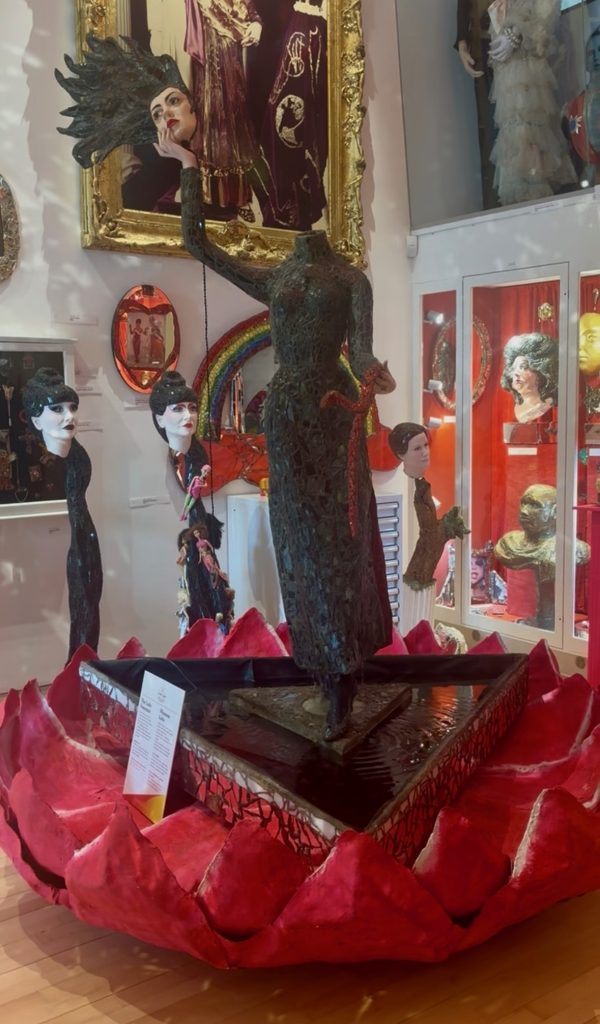
Photo of the ‘Lulu Fountain’ in the Andrew Logan Museum of Sculpture, where it currently resides
In 2006 I was passing through the town of Hay on Wye, when a colourful leaflet caught my eye. It was for the Andrew Logan Museum of Sculpture (ALMoS), a place I’d never heard of but was immediately attracted to because of the quirkiness and vibrancy of the images in the leaflet. ‘Bonkers fun’ was the phrase that came to mind!
Fast forward almost 20 years…
While decluttering, I happened across the very same leaflet and on a trip to Scotland with my sister, I found myself bypassing the usual route up from south Wales and taking the car on a detour…
determined to finally see ALMoS after all these years. I was not disappointed! It was everything it had promised to be; a jewel box stuffed with a dizzying amount of vivid sensory delights that made me immediately feel more alive. We found ourselves chatting to the friendly volunteers looking after the museum that day, and listened to the fascinating stories behind many of the exhibits. It seemed more than a coincidence that I had recently come across an advert for volunteers to undertake research for the ALMoS legacy project and so I applied to volunteer.
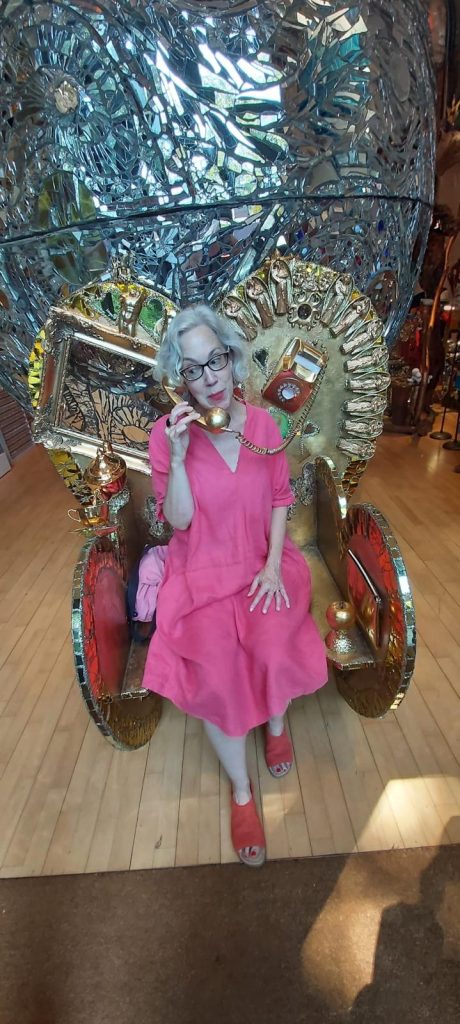
Photo of Ceri John on the AMW 2022 Gold Throne taken in the Andrew Logan Museum of Sculpture
I found myself drawn to the Lulu Fountain and started doing some research on it. The model for it was Andrew Logan’s close friend Luciana Martinez de la Rosa who was a talented artist in her own right. Tragically she died aged 47, of spinal meningitis. I initially decided to focus on Luciana herself and her close group of friends, named ‘Them’ by journalist Peter York in 1976 because of their strong aesthetic and the influence they had on the likes of people such as David Bowie, Marc Bolan (T-Rex) and Bryan Ferry (Roxy Music).
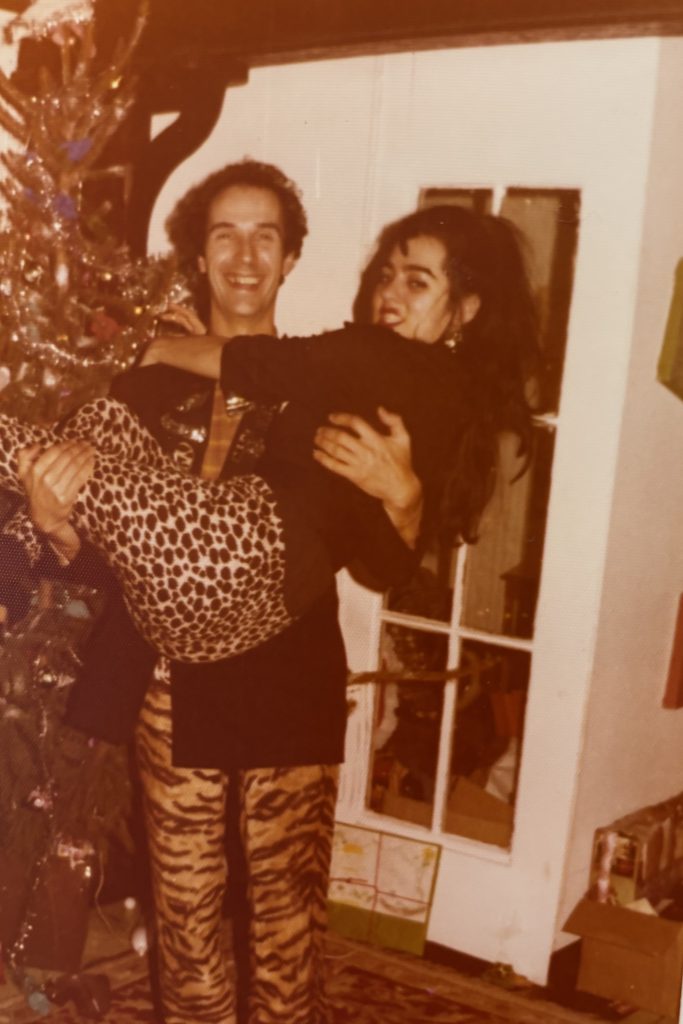
Andrew Logan and Lulu in 1975- Photo from Andrew Logan Museum of Sculpture photo archive
It soon became apparent that, while it was easy enough to find information on ‘Them’, Luciana appeared to be a beautiful, glamorous enigma with a carefully curated image who had left little trace of herself behind; aside from her paintings, other people’s recollections and a couple of magazine articles written about her. It has been like trying to complete a puzzle with pieces missing.
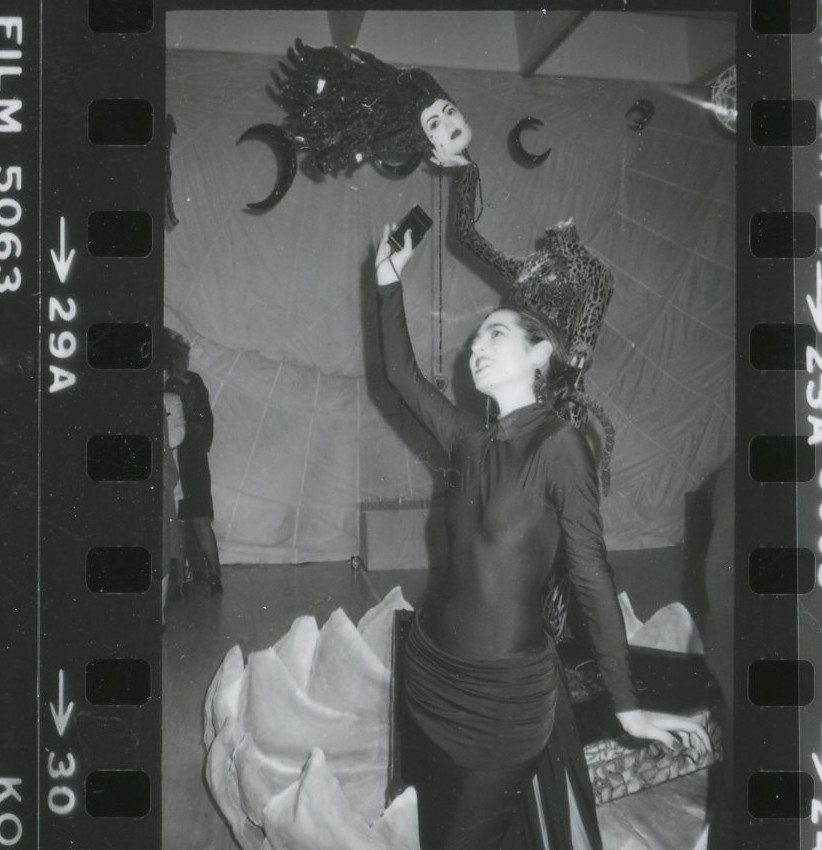
Photo of Luciana Martinez de la Rosa at the Goddess exhibition 1983- Photo curtesy of De Montfort University Special Collections
The impression I’ve received is that she was a force of nature: a fiercely loyal friend and a bold, charismatic, passionate woman, very much aware of her feminine powers. She was clearly focussed on her own art. Yet she appears to be viewed by posterity as primarily a well-connected muse and model for other members of ‘Them’. I also looked into the Hindu goddess Kali, on whom the fountain is
based.
Kali is multi-faceted in her meaning, often frightening in her appearance and, not surprisingly, frequently misunderstood. She is most often cast as a deity of death and destruction, shock and awe.
Kali is also portrayed as a strong, protective, mother goddess, and in the West she has been associated with sexual liberation. In her guise here she represents the cycle of birth, life and death and the
transcendence of the ego. In this version of the goddess holding her own head at length, having cut it off herself, the Lulu Fountain symbolises the destruction of the ego in order to regenerate and,
instead of blood, life giving water flows from her neck. Other symbols on the fountain – a red snake, a lotus, the use of circles and triangles – speak to a primordial cosmic energy. During my research, I discovered that the Lulu Fountain had originally been surrounded by a large mobile of the phases of the
moon which was removed soon after.
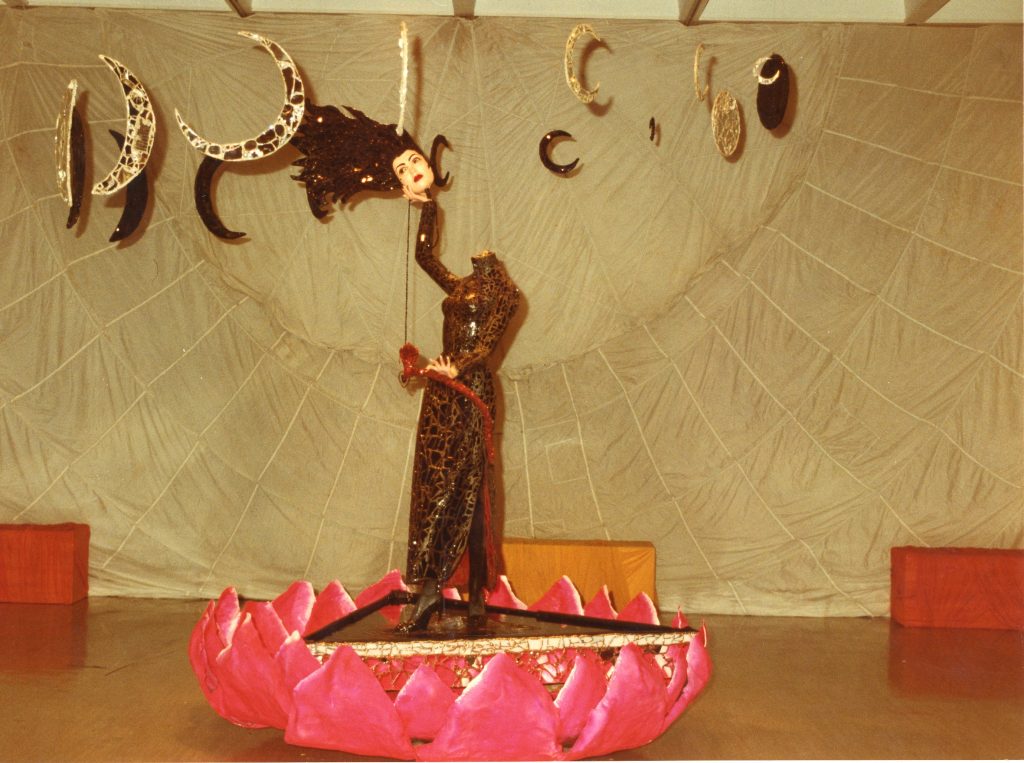
Photo of Lulu fountain with phases of the moon from De Montfort University Special Collection A09-A-05-08-03
Now I’m researching the cultural and social background of the UK around the time the fountain was created (1983) to provide a broader context for this sculpture: The huge social and economic
changes wrought by Margaret Thatcher and her government resulting from financial deregulation and de-industrialisation; the AIDS crisis; the Falklands War; the Greenham Common peace
movement, and the cultural and musical movement that was the New Romantics.
It’s been a mesmerising journey so far and I’m so grateful to have the opportunity to be involved in this project.
Written by Ceri John, ALMoS volunteer.
Ceri’s work forms a part of the ongoing Legacy research project at the Andrew Logan Museum of Sculpture. The museum is especially grateful to National Lottery Players and The National Lottery Heritage Fund for their support in enabling this vital research into our collection.
If you are interested in joining our volunteer team please email us at [email protected]
Ffotograff o’r ‘Ffownten Lulu’ yn Amgueddfa Gerfluniau Andrew Logan, lle saif ar hyn o bryd
Yn 2006 roeddwn i’n mynd trwy’r Gelli Gandryll, pan ddenwyd fy llygaid gan daflen liwgar. Roedd y daflen ar gyfer Amgueddfa Gerfluniau Andrew Logan (ALMoS), lle na chlywswn amdano erioed. ,Denwyd fi ati ar unwaith oherwydd hynodrwydd a bywiogrwydd y delweddau yn y daflen. ‘Hwyl wallgof’ oedd yr ymadrodd a ddaeth i’r meddwl!
Bron i 20 mlynedd yn ddiweddarach…
Wrth dacluso, gwelais yr un daflen eto. Ar daith i’r Alban gyda’m chwaer, cefais fy hun yn gwyro oddi ar fy llwybr arferol lan o dde Cymru, gan yrru’r car i gyfeiriad gwahanol … roeddwn yn benderfynol o weld ALMoS o’r diwedd ar ôl yr holl flynyddoedd hyn. Chefais i mo’m siomi! Roedd yn bopeth yr oedd wedi addo bod; blwch gemwaith wedi’i lenwi â nifer syfrdanol o bleserau synhwyraidd bywiog a wnaeth i minnau deimlo’n fwy bywiog ar unwaith. Fe wnaethon ni sgwrsio â’r gwirfoddolwyr cyfeillgar oedd yn gofalu am yr amgueddfa y diwrnod hwnnw, a gwrando ar y straeon diddorol y tu ôl i lawer o’r arddangosfeydd. Roedd yn ymddangos yn fwy na chyd-ddigwyddiad fy mod wedi dod ar draws hysbyseb yn ddiweddar am wirfoddolwyr i ymgymryd ag ymchwil ar gyfer prosiect etifeddiaeth ALMoS ac felly gwneud gais i wirfoddoli.
Llun o Ceri John a dynnwyd yn Amgueddfa Gerfluniau Andrew Logan. Mae hi’n eistedd ar ben Gorsedd Aur AMW 2022
Cefais fy nenu at Ffownten Lulu a dechreuais wneud rhywfaint o ymchwil arni. Ffrind agos Andrew Logan, Luciana Martinez de la Rosa, a oedd yn artist talentog yn ei rhinwedd ei hun oedd y model ar ei chyfer. Yn drasig, bu farw yn 47 oed, o lid yr ymennydd ar yr asgwrn cefn. Penderfynais ganolbwyntio ar Luciana ei hun a’i grŵp agos o ffrindiau, a enwyd yn ‘Nhw’ (Them) gan y newyddiadurwr Peter York ym 1976 oherwydd eu hestheteg gref a’r dylanwad a gawsant ar bobl fel David Bowie, Marc Bolan (T-Rex) a Bryan Ferry (Roxy Music).
Andrew Logan a Lulu ym 1975 – Llun o archif lluniau Amgueddfa Gerfluniau Andrew Logan.
Er ei bod hi’n ddigon hawdd dod o hyd i wybodaeth amdanyn ‘Nhw’, daeth yn amlwg yn fuan fod Luciana yn ymddangos yn ddirgelwch prydferth, hudolus gyda delwedd wedi’i churadu’n ofalus gan adael ychydig iawn o olion ohoni ei hun; ar wahân i’w phaentiadau, atgofion pobl eraill a chwpl o erthyglau cylchgrawn a ysgrifennwyd amdani. Mae wedi bod fel ceisio cwblhau pôs gyda darnau ar goll.
Ffotograff o Luciana Martinez de la Rosa yn arddangosfa’r Dduwies 1983 – Llun trwy garedigrwydd Casgliadau Arbennig Prifysgol De Montfort
Yr argraff a gefais yw ei bod hi’n fythgofiadwy: yn ffrind triw iawn ac yn fenyw feiddgar, garismatig, angerddol, oedd yn ymwybodol iawn o’i phwerau benywaidd. Roedd hi’n amlwg yn canolbwyntio ar ei chelf ei hun. Eto i gyd, mae’n ymddangos bod y cenedlaethau diweddarach yn ei hystyried yn awen ac yn fodel a oedd yn agos iawn at y rhai yr oedd aelodau eraill cylch y Nhw yn eu ceisio. Ystyriais hefyd y dduwies Hindŵaidd Kali, y mae’r ffownten wedi’i seilio arni. Mae ystyr amlochrog i Kali, ac yn aml mae hi’n frawychus ei hymddangosiad ac, felly’n cael ei chamddeall yn aml. Gan amlaf, caiff ei phortreadu fel duwdod marwolaeth a dinistr, sioc a pharchedig ofn.
Caiff Kali hefyd ei phortreadu fel mam-dduwies gref, amddiffynnol, ac yn y Gorllewin mae hi wedi cael ei chysylltu â rhyddid rhywiol. Yn y diwyg a welir yma mae hi’n cynrychioli cylch geni, byw a marw a throsgynoldeb yr hunan. Yn y fersiwn hon o’r dduwies, sy’n dal ei phen ei hun am gyfnod hir, wedi iddi ei dorri i ffwrdd, mae Ffownten Lulu yn symbol o ddinistr yr hunan er mwyn adfywio. Yn lle gwaed, mae’r dŵr sy’n rhoi bywyd yn llifo o’i gwddf. Mae symbolau eraill ar y ffownten – y neidr goch, y lotws, y defnydd o gylchoedd a thrionglau – yn datgan egni cosmig cyntefig. Yn ystod fy ymchwil, darganfûm fod Ffownten Lulu wedi’i hamgylchynu’n wreiddiol gan symudyn mawr o gyfnodau’r lleuad a gafodd ei dynnu’n fuan wedyn.
Llun o ffownten Lulu gyda chyfnodau’r lleuad o Gasgliad Arbennig Prifysgol De Montfort A09-A-05-08-03
Rwy’ nawr yn ymchwilio i gefndir diwylliannol a chymdeithasol y DU tua’r adeg y crëwyd y ffownten (1983), er mwyn darparu cyd-destun ehangach ar gyfer y cerflun hwn: Y newidiadau cymdeithasol ac economaidd enfawr a achoswyd gan Margaret Thatcher a’i llywodraeth yn sgil dadreoleiddio ariannol a dad-ddiwydiannu; argyfwng AIDS; Rhyfel y Malfinas; mudiad heddwch Comin Greenham, a mudiad diwylliannol a cherddorol y Rhamantwyr Newydd.
Mae wedi bod yn daith hudolus hyd yn hyn ac rwyf mor ddiolchgar o gael y cyfle i fod yn rhan o’r prosiect hwn.
Ysgrifennwyd gan Ceri John, gwirfoddolwr ALMoS.
Mae gwaith Ceri yn rhan o’r prosiect ymchwil Etifeddiaeth parhaus yn Amgueddfa Gerfluniau Andrew Logan. Mae’r amgueddfa’n arbennig o ddiolchgar i Chwaraewyr y Loteri Genedlaethol a Chronfa Dreftadaeth y Loteri Genedlaethol am eu cefnogaeth wrth alluogi’r ymchwil hanfodol hon i’n casgliad.
Os oes gennych ddiddordeb mewn ymuno â’n tîm gwirfoddolwyr, anfonwch e-bost atom yn [email protected]
10 months ago